

Estate Sale Pickup & Delivery
Estate Sale Pickup in Orange County: A Practical Buyer’s Guide (2026)
Last updated: January 15, 2026
Estate sales are awesome until you realize the best item you bought is also the worst item to move.
Maybe it’s a solid wood dresser, a vintage glass cabinet, a heavy dining table, or a “perfect” couch that suddenly feels like it weighs 600 pounds the moment you try to get it down a staircase. And the estate sale staff usually isn’t moving anything for you.
This guide is for real Orange County estate sale buyers: people who want to score a deal without damaging the item, wrecking their walls, or turning pickup into an all-day headache. I’ll walk you through the best options (including DIY options), what to check before you pay, how to protect fragile items, and how to avoid the most common pickup mistakes.
If you’re buying estate sale furniture, antiques, appliances, or bulky items in OC, start here.
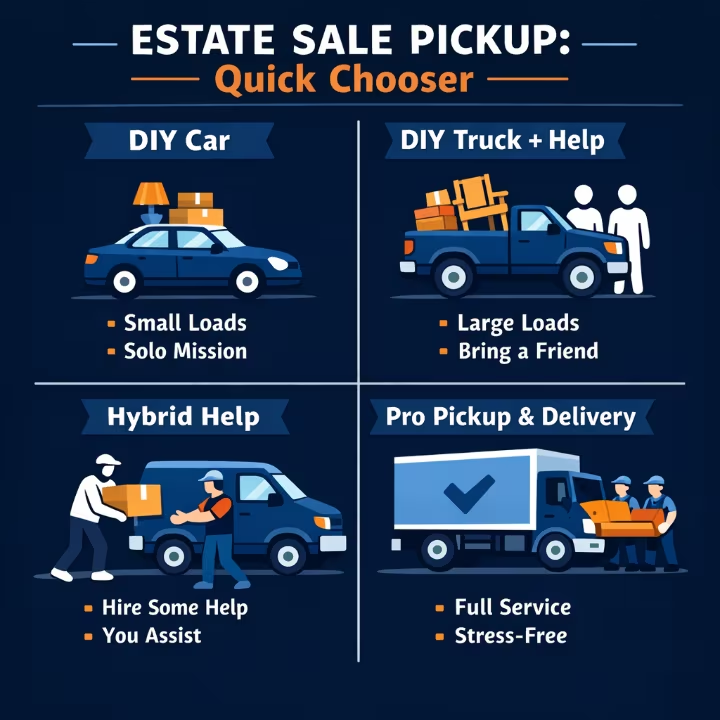
Quick Chooser: Pick Your Estate Sale Pickup Plan
Use this to choose the right approach based on item size, stairs, time window, and risk.
- Small items + fits in your car → DIY pickup (fastest + cheapest)
- Medium furniture + you have help → DIY + blankets + straps (doable)
- Large/heavy items or stairs → hire delivery help (protects item + your back)
- Multiple items / tight window / fragile pieces → professional pickup & delivery (lowest stress, lowest damage risk)
Fast rule:
If it’s heavy, awkward, fragile, or upstairs—don’t gamble. Most “estate sale disasters” happen because people try to muscle it out with no tools, no plan, and one helper.
Before You Buy: 7 Checks That Save You Money (and Pain)
This is the difference between a “score” and a “regret.”
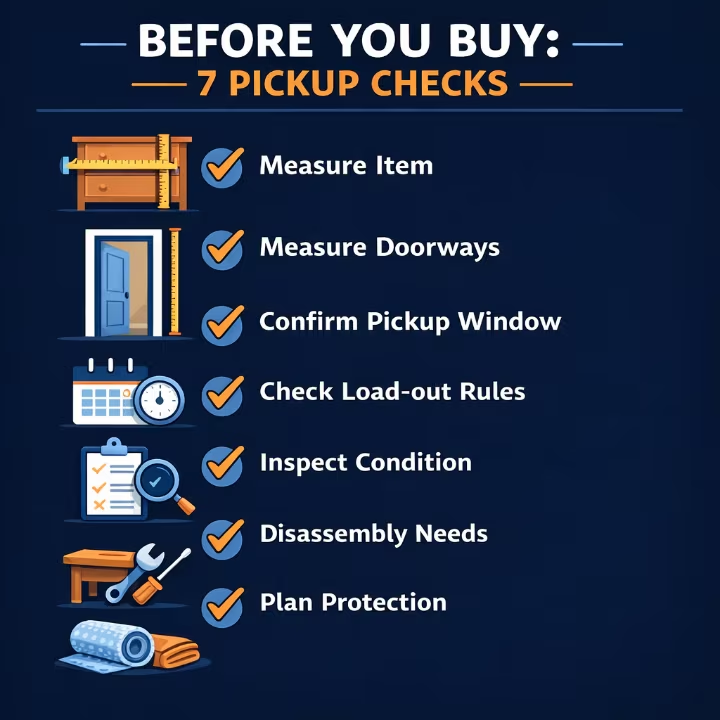
1) Measure the item (and your space)
- Width, height, depth
- If it’s a couch: measure the longest rigid dimension
- If it’s a cabinet: note protruding handles or legs
2) Measure access points
- Door width
- Hallway turns
- Stair width
- Elevator size (if applicable)
- Ceiling height near stair landings
If you don’t measure, you’re betting the whole purchase on vibes.
3) Confirm the pickup window
Estate sales often have strict pickup windows. Ask:
- Same-day pickup required?
- Must be picked up before close?
- Can you return later that day?
- Can you schedule pickup tomorrow?
4) Ask about load-out rules (this matters)
Some locations are strict:
- No moving items through certain halls
- Use a specific exit
- Protect floors/walls
- Parking limitations
5) Check item condition like a grown-up
You’re buying as-is. Check:
- Wobble
- Drawer function
- Cracks, chips, veneer damage
- Smells (smoke/pets)
- Missing hardware
If you suspect pests, don’t gamble—here’s the official CDPH bed bug fact sheet so you know what to look for and how to avoid bringing them home.
6) Check if disassembly is required
Some pieces must be disassembled:
- Beds
- Large desks
- Some sectionals
- Big shelving
7) Plan protection before you move it
At minimum:
- Moving blanket
- Stretch wrap
- Ratchet straps
- Furniture sliders or dolly
Most damage happens in the first 3 minutes of moving.
What to Bring to an Estate Sale Pickup (Quick Kit)
Even if you’re “just grabbing a dresser,” showing up unprepared is how items get scratched, walls get damaged, and the pickup takes 3x longer than it should.
Bring this basic kit:
- 2–3 moving blankets (protect corners and prevent rubbing)
- Stretch wrap (keeps drawers/doors shut and holds padding in place)
- 2 ratchet straps (if it isn’t strapped, it isn’t secure)
- Dolly or hand truck (especially for long carries and heavy items)
- Gloves (better grip and fewer smashed fingers)
- Basic tools: screwdriver, Allen keys, adjustable wrench (for quick disassembly)
- Painter’s tape + a marker (label hardware bags and protect surfaces without residue)
- Cardboard corner protectors (or cut a box into corner guards)
- Furniture sliders (best $10 you’ll spend for heavy pieces)
If the item is glass, mirrored, or antique, add:
- Rigid backing (foam board or flattened cardboard)
- Extra padding for edges (edges are where glass fails)
This setup costs almost nothing compared to replacing a scratched cabinet or shattered mirror.
The Most Common Estate Sale Pickup Mistakes
If you avoid these, you’ll already be ahead of most people.
- Buying first, measuring later
- Bringing no tools or protection
- Assuming “two people can handle it”
- Dragging furniture instead of using sliders/dolly
- Not protecting door frames and corners
- Not strapping items in the truck
- Forgetting hardware and screws when disassembling
- Underestimating stairs
- Leaving without photos of pre-existing damage (especially for fragile items)
Stairs and Tight Turns: The Real Problem
Most estate sale pickups go wrong at the same places: stair landings, narrow hallways, and door frames. A piece can be “light enough” but still impossible to maneuver if you can’t rotate it without scraping walls or twisting the item.
Before you lift:
- Clear the path completely (rugs, shoes, décor, anything loose)
- Measure the tightest point, not the widest doorway
- Plan where you’ll pivot (landing, hallway turn, doorway)
- Protect corners and frames with blankets or cardboard
- Move slow—rushing creates damage
If you’re unsure, don’t force it. Forcing a tight turn is how people crack legs, blow out joints, and gouge walls.
Your Pickup Options (Free → Paid) and When Each Makes Sense
This is the heart of the guide: realistic options, tradeoffs, and best use cases.
Option 1: DIY Pickup (Car or SUV)
What it is:
You transport the item yourself using your car/SUV and basic protection.
Pros
- Cheapest
- Fastest for small items
- Full control
Cons
- Limited by space
- Easy to scratch/damage items
- Risky for fragile pieces
- Not realistic for heavy furniture
Best when:
- Small/medium items
- Lightweight chairs, lamps, small dressers
- You can protect it properly and load safely
Prep tips:
- Bring blankets, stretch wrap, and straps
- Put moving blankets between items
- Don’t stack heavy items on fragile ones
Option 2: DIY Pickup (Truck + Help)
What it is:
You bring a truck (or rent one), bring help, and move the item yourself.
Pros
- Still relatively low cost
- Works for larger furniture
- Same-day possible
Cons
- Requires tools + experience
- High risk of damage on stairs/turns
- Injury risk is real
- You’re responsible for loading, transport, unloading
Best when:
- You have 2–3 capable helpers
- Item is heavy but straightforward (no tight stairs/hallway turns)
- You can strap it securely
Prep tips (non-negotiable):
- Dolly or hand truck
- Moving blankets
- Ratchet straps
- Gloves
- Corner protectors (even cardboard helps)
- Use furniture sliders for initial moves
Option 3: Rent a Truck + One Helper (Hybrid DIY)
What it is:
You do the truck rental and planning, but pay for help with lifting/moving.
Pros
- Less strain
- Less chaos
- Can still be cost-effective
Cons
- Still DIY coordination
- Still risk if helpers aren’t experienced
- Still need protection materials
Best when:
- Item is medium-to-heavy
- There are stairs
- You want to avoid injury but keep cost down
Option 4: Professional Estate Sale Pickup & Delivery (Done-for-you)
What it is:
A crew picks up items from the estate sale, navigates stairs/hallways, protects the item, straps it properly in the vehicle, and delivers it to your home. Optional disassembly/assembly if needed.
Pros
- Lowest stress
- Lowest damage risk (if they’re legit)
- Handles stairs and tight spaces
- You don’t need to rent anything
- Best option when pickup windows are tight
Cons
- Paid service
- Some items may require extra protection or special handling
- Same-day windows can be limited depending on schedule
Best when:
- Heavy items (dressers, solid wood furniture, appliances)
- Fragile items (glass cabinets, mirrors, art)
- Stairs, long carries, or tight turns
- You bought multiple items and want one coordinated delivery
Typical pricing signals (not hard quotes)
Pricing usually depends on:
- Item size/weight
- Stairs (pickup and/or delivery)
- Distance
- Disassembly needs
- Fragile handling (glass/antique pieces)
Reality: Paying for delivery often saves money when you factor in truck rental, time, straps, blankets, and the cost of damaging your item.
The “Damage Prevention” Checklist (Use This Every Time)
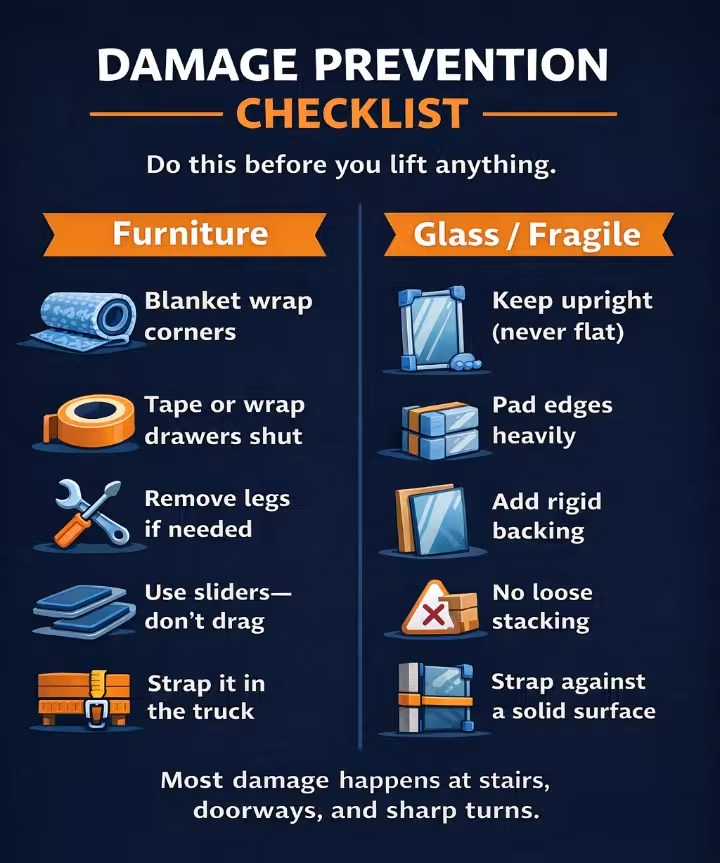
If you follow this, you avoid 90% of the problems.
For furniture:
- Wrap corners
- Protect handles and legs
- Use moving blankets between hard surfaces
- Tape drawers shut (painter’s tape or stretch wrap)
For glass and mirrors:
- Keep upright
- Never lay large glass flat in a truck without proper support
- Use a rigid backing (cardboard/foam board)
- Pad edges heavily
For appliances:
- Secure doors
- Keep upright if required
- Use a dolly designed for appliances if possible
- Protect flooring during moves
For art:
- Don’t let frames rub
- Use cardboard corners
- Wrap surface with clean material
Furniture Disassembly (When You Should Do It)
Some estate sale pieces have to be broken down to move safely.
Usually worth disassembling
- Bed frames
- Large desks with bulky legs
- Modular sectionals
- Shelving that can rack/twist
Usually NOT worth disassembling
- Solid wood dressers (often safer kept intact)
- Antique pieces with weak joints
- Anything you can’t reassemble confidently
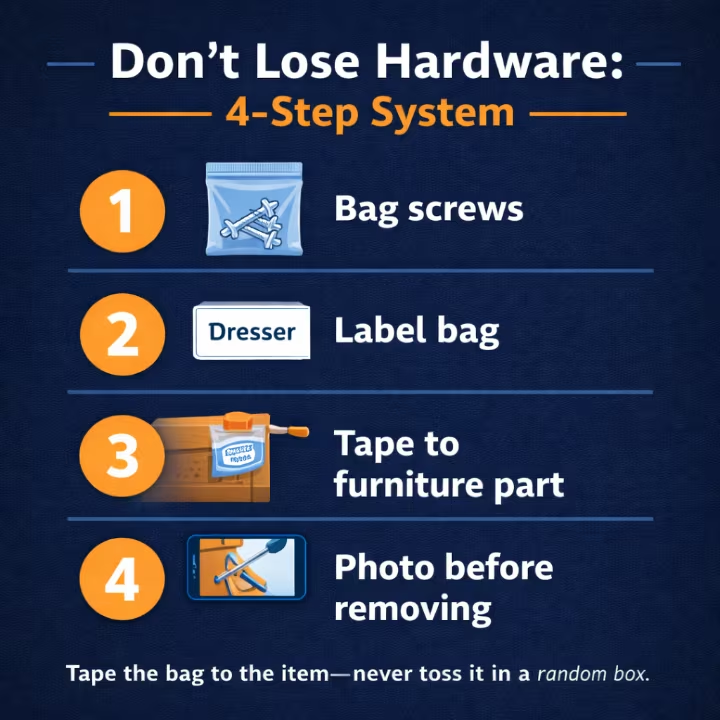
Hardware system (do this every time)
- Bag screws
- Label bag
- Tape bag to the item
- Photo the assembly before removing anything
This prevents the “missing bolts” nightmare.
Loading the Truck: Simple Order That Prevents Damage
If you’re doing any DIY transport, this matters.
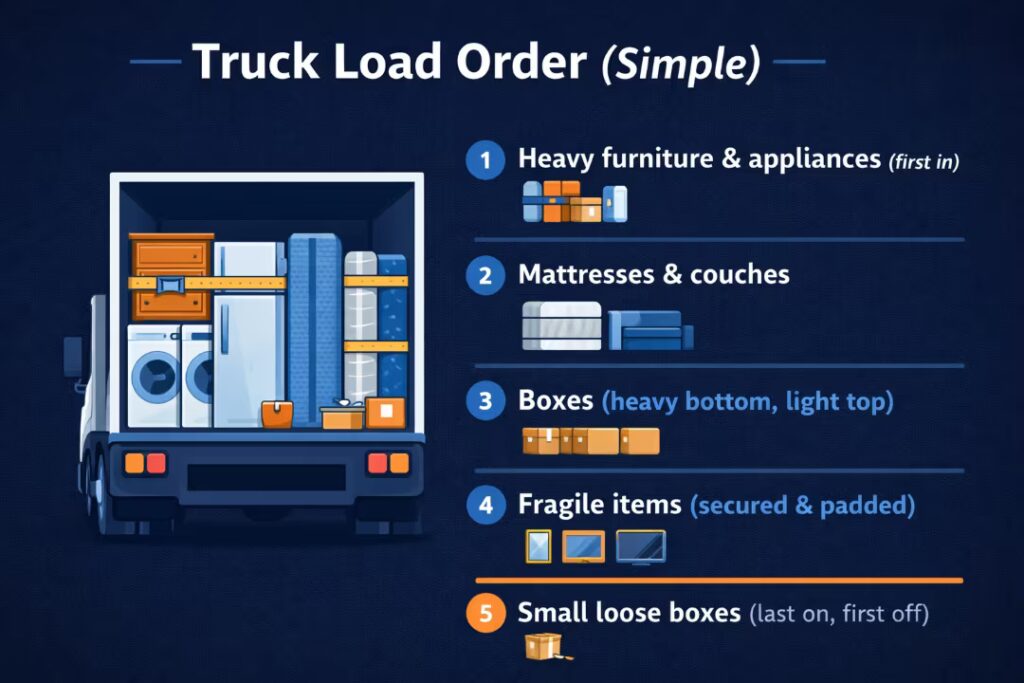
- Heavy furniture & appliances (first in, strapped)
- Mattresses & couches (upright, wrapped)
- Boxes (heavy bottom, light top)
- Fragile items (secured and padded)
- Small loose boxes (last on, first off)
If your load isn’t strapped, it’s not loaded. It’s just waiting to crash.
If you’re DIY transporting, use proper tie-downs—this quick guide on how to secure cargo in a pickup truck covers the basics.
Same-Day Estate Sale Pickup in Orange County: What Makes It Hard
Same-day is doable, but a few things make it tricky:
- Tight pickup windows
- Parking constraints
- Long carry distances
- Stairs
- Fragile items
- Multiple stops (estate sale + your home + dump/donation if needed)
- Gated communities / HOA rules
If you’re on a tight timeline, plan for:
- Quick communication
- Photos of access points
- Clear list of items to pick up
- Clear address and level/stairs
Real Scenarios (So You Can Choose the Right Option)
- Scenario A: Small items (lamps, decor, a chair) — DIY car pickup is perfect.
- Scenario B: Heavy dresser upstairs — DIY gets risky fast; delivery help usually pays for itself.
- Scenario C: Glass cabinet + mirror — keep upright, pad edges, controlled loading (pro strongly recommended).
- Scenario D: Multiple items — one coordinated pickup + one delivery trip = best.
Quick FAQs
About OC Bros
We’re a licensed and insured local team serving all of Orange County. We help estate sale buyers get heavy, awkward, or fragile items home safely — from estate sale pickup & delivery to furniture assembly and junk removal (for old items you’re replacing). Flat-rate pricing, clear timelines, and no surprises.
Next Step
- Want the DIY route? Use the checklists above (measure first, plan protection, and strap your load).
- Want it handled safely — especially for stairs, tight turns, or fragile pieces? Text a photo of the item(s), the pickup city, and the pickup window to (657) 776-2336 for a flat-rate estimate and a clear plan.
Need help with pickup and delivery?
If you want it handled cleanly (especially for heavy items, or fragile items), you can combine:
- estate sale pickup & delivery help
- furniture disassembly/assembly
- junk removal for old items you’re replacing
Text a photo of the item(s) and the pickup address details (stairs/level + pickup window) to (657) 776-2336 for a clear plan and flat-rate estimate.
Takes less than 2 minutes • No name, email, or credit card required